Sew Vintagely
Regency Era Shift
Regency Era Shift
Couldn't load pickup availability
Share
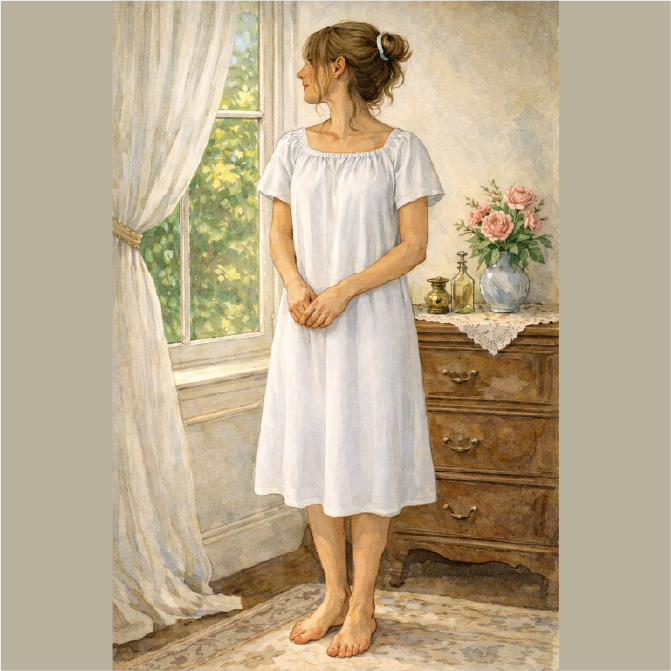
Recreate an essential foundation garment of the early 19th century with this Regency era shift sewing pattern, thoughtfully designed for historical accuracy and everyday wear beneath your Regency wardrobe.
Based on an extant period example, this shift is the first layer worn against the skin, traditionally styled to sit comfortably beneath stays (corsets) and gowns such as the Lady Katherine dress. With its softly gathered neckline and clean silhouette, it offers both authenticity and practicality for historical costuming.
Unlike pieced historical shifts that rely on narrow fabric widths and triangular gores, this pattern provides a modern graded fit with simplified construction, making it approachable while still honoring period design.
✨ Pattern Features
- Digitally drafted from a historical reference garment
- Classic Regency silhouette with short sleeves and gathered neckline
- Designed to be worn under stays and Regency dresses
- Streamlined construction with fewer seams than traditional methods
- Ideal for both historical costuming and foundational wardrobe pieces
🧵 Techniques Included
- Flat felled seams
- Bias binding finish
Instructions are written with machine sewing in mind, while remaining fully adaptable for hand sewing using period-correct techniques.
📥 Digital Download Details
- Instant PDF download after purchase
- Layered pattern files for easy size selection
- Print at home (tiled) or large-format printing options
- Requires Adobe Acrobat Reader (free) for proper use of layers
🪡 Perfect For
- Regency reenactment and historical interpretation
- Period-accurate undergarments
- Costume designers and historical sewists
- Building a complete Regency wardrobe foundation
📜 Historical Note
During the Regency period, shifts were cut economically from narrower fabric widths and pieced together with side gores. This pattern offers an alternative approach—maintaining the look and function of the original garment while simplifying the sewing process.